
English| EUR
Suggested for you
More currencies
Choose a language
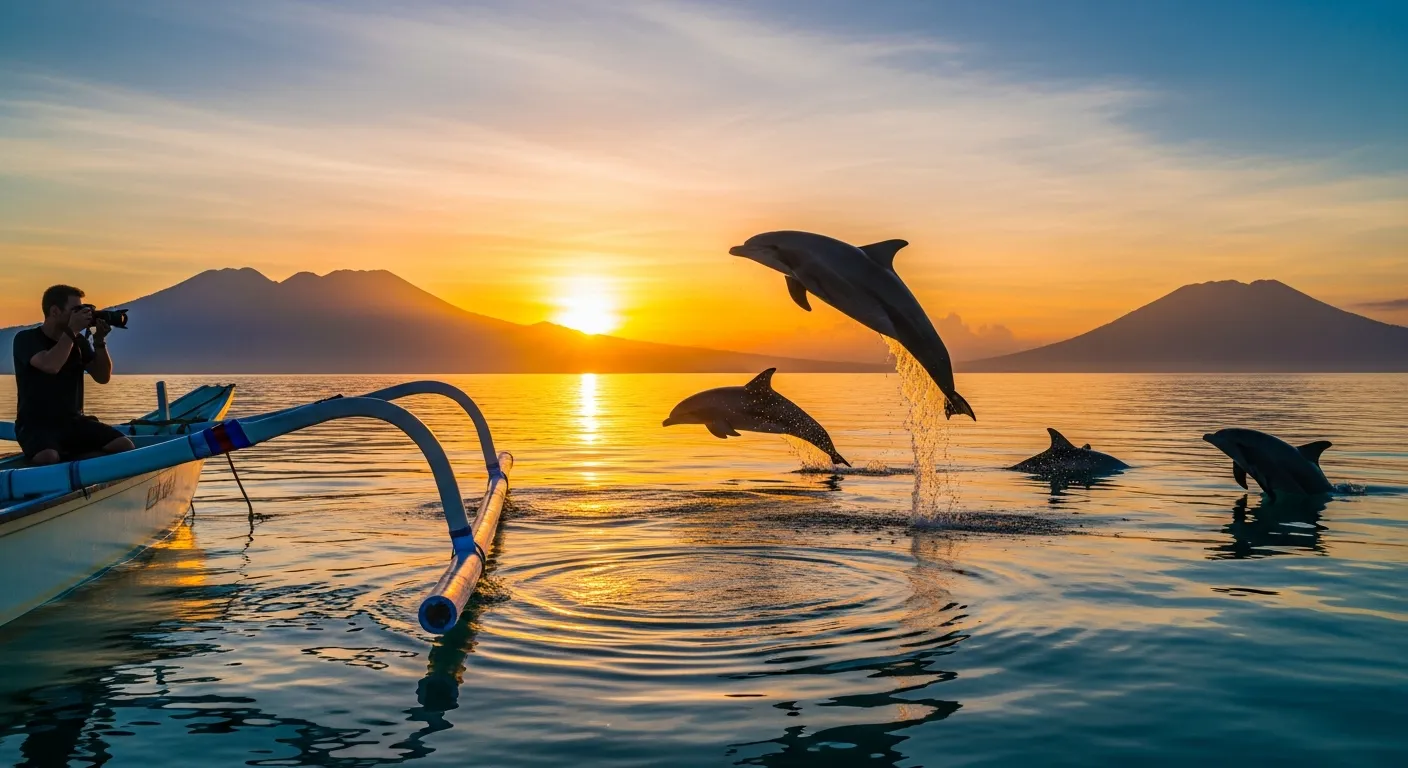
Lovina's sunrise dolphin tours draw hundreds of visitors each week to witness wild spinner dolphins in their natural habitat. Not every operator follows the same standards, and the gap between sustainable wildlife watching and disturbance is measured in boat speed, distance, and the willingness to turn away when animals show stress. This guide explains how to identify ethical practices before you book.
Quick answer
A lovina dolphin tour ethical approach requires operators who maintain 30-meter minimum distance, cut engines when dolphins surface nearby, limit group size to eight boats or fewer, and abort the trip if animals display avoidance behavior. Tours depart between 05:30 and 06:30 when spinner dolphins rest nearshore after nocturnal feeding. Entry to Lovina Beach itself is free; tour fees are charged per boat or person by individual operators, with no official pricing structure.
Lovina's coastal waters host one of Bali's last accessible populations of wild spinner dolphins, a species that migrates inshore at dawn to rest in the calm bays north of Buleleng Regency. The tourism economy that grew around these encounters now supports hundreds of families, but it has also introduced pressure on a fragile marine ecosystem. During peak season, as many as fifty traditional outrigger boats may converge on a single pod, and the noise, proximity, and duration of human presence can fragment rest cycles and push animals into deeper water. An ethical lovina dolphin tour starts before you step into a boat. Responsible operators display written wildlife guidelines at the ticket counter, cap daily departures to reduce cumulative disturbance, and train captains in non-invasive observation. Look for boats with written commitments to the 30-meter rule, engine-off protocols when dolphins approach voluntarily, and a refund or reschedule policy if no sightings occur. Avoid any service that advertises swimming with dolphins or guarantees close encounters—both indicate practices that prioritize entertainment over animal welfare. The geography of the encounter matters as much as the operator's intent. Spinner dolphins use Lovina's sheltered bays as daytime refuge after hunting in open ocean at night. Morning sightings are not performances; they are biological necessities. A boat that lingers too long, circles a pod, or accelerates to intercept a moving group disrupts rest behavior and forces energy expenditure the animals cannot afford. Ethical tours last 90 minutes, spend no more than ten minutes with any single pod, and leave immediately if dolphins dive repeatedly or shift direction to avoid the fleet. Choosing a responsible marine wildlife experience in North Bali requires asking direct questions about group size, observation distance, and what happens when conditions are poor. The best operators treat a quiet morning with no sightings as success—it means the dolphins were resting undisturbed farther offshore, exactly where they should be. That restraint, rather than the promise of a guaranteed photo, is the clearest signal of a lovina dolphin tour ethical framework.
“A boat that lingers too long, circles a pod, or accelerates to intercept a moving group disrupts rest behavior and forces energy expenditure the animals cannot afford.”
The best arrival window for observing dolphins in Lovina is 05:30–06:30, as sightings are most frequent during these early morning hours. Aligning your trip with this time allows for natural observation while adhering to ethical distance practices, regardless of the season.
Dry, 24°C–32°C; calm seas for transit. Consistent weather provides stable conditions for early morning dolphin observation.
Humid, 25°C–33°C; potential for morning rain. Expect variable sea conditions that may affect tour departure schedules.
—; local sea conditions prevail. Mid-week trips offer a quieter experience on the water, supporting reduced vessel congestion.
Verdict: The best opportunity for an ethical experience is a weekday morning during the dry season, arriving at the 05:30–06:30 window.
Responsible dolphin watching depends on strict boat conduct and visitor behavior. Operators and guests share the duty to minimize disturbance to wild pods.
Vetting an operator for ethical practices takes 10–15 minutes of research before you book. Follow this sequence to confirm the operator meets basic safety and wildlife standards.
Check review platforms and operator websites for mentions of distance protocols, engine noise management, and whether they limit the number of boats. Operators who advertise "guaranteed dolphin encounters" or chase pods typically ignore guidelines.
Contact the operator directly and ask what minimum distance they maintain from dolphins—responsible operators keep at least 50–100 meters and never circle or cut across a pod's path.
Request the maximum number of passengers per boat and the exact departure window. Smaller groups (4–6 people) reduce noise and crowding; departures between 05:30–06:30 align with natural dolphin activity rather than chasing them later.
Ask whether the boat carries life jackets for all passengers, a first-aid kit, and a working radio or phone for emergencies—operators who skip this step often cut other corners.
Reserve through the operator's direct contact or a verified booking agent, and ask for an email or message confirming the date, time, boat capacity, and cancellation terms.
Access to Lovina Beach is free for all visitors. Costs for dolphin watching tours are determined solely by private boat operators rather than a fixed public entry fee.
Verdict: Travelers typically pay private boat operators directly, with total costs varying based on the quality of equipment and the operator's commitment to ethical practices.
Lovina Beach is located in the Buleleng Regency of North Bali. Travelers typically reach this coastal area via private car or taxi from major southern hubs like Denpasar, Kuta, or Ubud.
Jalan Raya Denpasar-Gilimanuk and Jalan Raya Bedugul-Singaraja
Direct transfer via Jalan Raya Bedugul-Singaraja
Public shuttle to Singaraja terminal followed by local transport
Given the distance from southern Bali, many visitors choose to stay overnight in the Buleleng Regency to ensure they reach the beach within the 05:30–06:30 arrival window.
Everything you need to know about lovina dolphin tour ethical
The ethical nature of these trips depends heavily on the operator's conduct regarding marine mammal protection and boat proximity. Seeking a lovina dolphin tour ethical operator who maintains distance and limits engine noise is essential for wildlife welfare.
To ensure your trip is sustainable, look for local companies that prioritize environmental conservation and follow international guidelines for whale and dolphin watching. Reviewing recent traveler feedback can help you identify a truly lovina dolphin tour ethical partner that avoids chasing pods.
Dolphin sightings are most frequent in the early morning, so you should plan your arrival between 05:30 and 06:30. Most private boats depart at sunrise to maximize your chances of seeing wild spinner dolphins in their natural habitat.
There is 0 IDR entrance fee to access Lovina Beach itself. Tours are charged per boat or per person directly by private operators, so costs depend on the service provider you choose.
Responsible boat captains should approach dolphin pods slowly and avoid surrounding or separating the animals. Maintaining a respectful distance is a core component of any lovina dolphin tour ethical practice that puts the needs of the marine life first.
Yes, many families participate in these tours as it is a calm way to experience the Bali sea. Please ensure that your chosen provider supplies well-maintained life jackets and follows strict safety protocols for all passengers.
The most common mistake is booking a large, crowded boat that lacks a focus on marine conservation. Choosing a smaller vessel often allows for a quieter and more sustainable observation experience that aligns with ethical tourism principles.
Private Lovina Dolphin Tours
Read more Tickets & toursLovina Dolphin Tour Packages
Read more Tickets & toursLovina Dolphin Tour from Ubud
Read more GuideBest Time for Lovina Dolphin Watching
Read more GuideLovina Dolphin Tour Price & Packages
Read more GuideLovina Dolphin Tour from Canggu
Read more